Filipinos in South Korea

Taiwan tagged “the Philippines” as China’s most bullied country – Japan come to the rescue.

"The China Post" online news paper tagged "the Philippines" as China's heavily bullied country.

The Senkaku island disputes with China and Taiwan is the boiling point which evaporates Japan from the close pot and landed to the Philippine' tropical shore for Military strategic alliance.  

It is not in the eye of Japan to make alliance with the Philippines in connection with the territorial disputes with china as it would only hurts their sweet economic relation that would probably affect Japan's economy, but a destiny which is sit to happen has finally happened.

Japan is closing their factories in china and in a migration exodus with South Korea to move their factories to the Philippines because of the rising labor costs in China.

The rising labor cost in China could not be the only reason but also the island disputes with china in the Ieo do of South Korea's Exclusive economic Zone and Senkaku Island of Japan.

The recent aggressive action of china in claiming the thousand of Kilometers distance - Southeast Asean territories triggered a worry to South Korea as china send a signal to control the Ieo-do (Ieo Island) in the southwestern part of Jeju which was administered by South Korea pushing them to intensity their new Military base in the area to protect their territory.

Japan on the other hand suffered an economic sanction of china for the Senkaku Island disputes reason why Japan jumps to the Philippine for alliances as their mostly protected economic success with china is fading fast as sunset.

When the Philippines is crying for help from the USA during the Scarborough Shoal's Stand-off with china, USA is hesitant to commit with the Philippines's signed MDT. Opposite from what the Philippines is hoping for, a Philippine envoy was sent to the White House to ask for public commitment that the USA will honor the Mutual Defense Treaty (MDT) but ended up with embarrassment as the USA ignored the Philippines with a word "We will not take side in any sea dispute with other Asian countries".

Japan has lost all the choices than to make alliance with the very weak defense Philippines as one of the most important country which is heavily bullied by china's invasion in its territory. This is the second plan to Japan which seem to be timely and mostly welcome by the Philippines.

"The China Post" online news paper's published article titled "Japanese foreign minister visit shot in the arm for Philippines" also tagged the Philippines as Chinas' heavily bullied country.

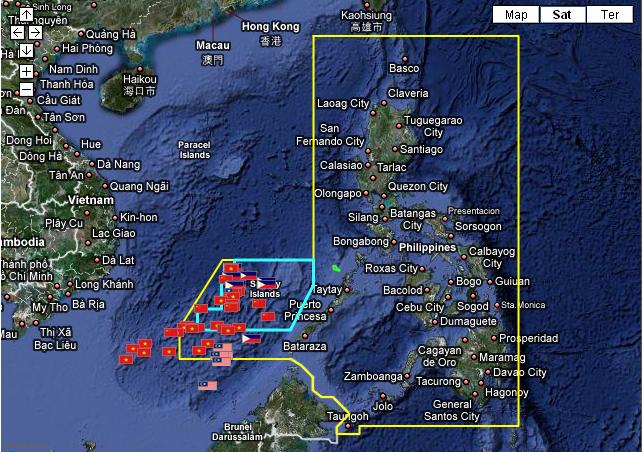
The China Post: Seven decades after the Japanese invasion of the Philippines, history has taken an ironic turn as the two former enemy nations pivot their relations on a security alliance under the threat of Chinese expansionism in the East China Sea and the West Philippine Sea (South China Sea).

This alliance is anchored on the security architecture linking the United States, Japan, the Philippines and Vietnam — all onetime enemies, not only in World War II but also up until the Vietnam War in the 1960s and 1970s.

This tectonic shift in defense realignment in the Asia-Pacific region was underlined by the historic visit to the Philippines last week of Japanese Foreign Minister Fumio Kishida.

The pivotal position of the Philippines in this nascent realignment was highlighted by the fact that Manila was the first Southeast Asian capital Kishida visited in his four-nation Asia-Pacific swing following the election on Dec. 26 of nationalist Prime Minister Shinzo Abe. Kishida's tour included Singapore, Brunei and Australia.

Like Japan, the Philippines and Vietnam bear the brunt of China's pressure in asserting its claims on territories in the East China Sea and West Philippine Sea, claimed by partners in the emerging alliance. The disputes have caused tensions in the region that have raised fears these could ignite dangerous flash points, leading to war.

Strategic Partner

Kishida's visit underscored the Philippines' role as Japan's strategic partner in the Asia-Pacific region. In a message ahead of his arrival, Kishida cited the importance of Japan's Asian neighbors, particularly the Philippines, in advancing the security between Japan and the United States to counter the rise of China as a military power in the region.

The Philippines and Japan have defense treaties with the United States that are the anchors of its security system in the Asia-Pacific.

Kishida did not disguise the security accent of his tour and Japan's concern over the rising tensions between Tokyo and China over disputed islands in the East China Sea.

"Currently the strategic environment in the region continues to change significantly," Kishida said. "Japan, as a responsible democracy, will play a proactive role in the stability and prosperity of the Asia-Pacific region. I believe that it is important to strengthen the Japan-U.S. alliance and deepening collaboration with neighboring countries which are developing under freedom, democracy and market economy."

The meetings between Kishida and Philippine officials went beyond platitudes and rhetoric. They agreed, among other things, to enhance the military hardware of the Philippines to resist aggressive actions by China in the strategic waterway where Beijing is locked in territorial disputes with the Philippines, Vietnam, Brunei, Malaysia and Taiwan.

Common Challenges

The Wall Street Journal reported that Philippine Foreign Secretary Albert del Rosario and Kishida "discussed the common challenges" that the two countries "face in terms of the apparent assertions of China," as well as the "possibility of sharing their strategies in dealing with these issues."

In concrete terms, Japan has agreed to provide the Philippines with 10 multirole response vessels to assist the Philippine Coast Guard (PCG) in better patrolling Philippine maritime territories. According to Del Rosario, the patrol boats are expected to arrive in the Philippines in 18 months.

The military procurement from Japan followed an increasing flow of weapons and armaments over the past two years from the United States, Italy and France to beef up the firepower of the PCG — the weakest maritime defense force among the countries with rival claims in the West Philippine Sea.

China's maritime forces have been prowling at will, with impunity, in waters where the Philippines, for instance, claims ownership of islands as part of its exclusive economic zone under international law.

Kishida's visit came as a shot in the arm for the Philippines, the country most bullied by China. In an interview with the Financial Times newspaper last month, Del Rosario said the Philippines would strongly support a rearmed Japan shorn of its pacifist constitution as a counterweight to the growing military assertiveness of China.

Balancing Factors

"We would welcome that very much," Del Rosario said. "We are looking for balancing factors in the region, and Japan could be a significant balancing factor."

The statement upset China, which has accused the United States, Japan and their allies in the emerging realignment of building a ring for the "encirclement" of China.

At the end of Kishida's visit, President Aquino poured fuel on the fire of China's concern with a statement that a stronger Japan would be a counterweight to the "threatening" presence of China in the West Philippines Sea.

At a joint press briefing with Del Rosario, Kishida called for stronger ties with the Philippines to "ensure regional peace," amid tense territorial disputes in the West Philippine Sea.

"On the political and security front, we agreed on strengthening policy dialogue and enhancing maritime cooperation on other matters," Kishida said.

This was music to the ears of Philippine officials. The president and Kishida also discussed "common challenges" that both the Philippines and Japan face with China's growing assertiveness in the West Philippine Sea.

More important to Filipinos is that the Philippine-Japan entente has gone beyond tough words without teeth. The meetings with Kishida hit hard ground. They talked about Japanese help in improving the PCG's capability — so Philippine naval ships can fire back and sink enemy ships.

"The acquisition of multipurpose vessels is undergoing serious consideration," Del Rosario said.

This is the kind of language that China respects because these are words backed by military hardware.

=======

Many Economy Army abroad, the OFWs are crying from shame of having their beloved country left without them is heavily bullied. They are crying that the Philippines has lost its dignity for its inability to protect its territory as it is ill-equipped and weakest arm in Asia.  Several nationalistic groups informally formed by OFWs to generate fund for the armament upgrade for the Armed Forces of the Philippines but before it's launching, it ended up a BIG SNUB, from the Chief of Staff of the Philippines, General Jessie Dellosa as it believes to contribute only severe conflict and trouble with china.

The campaign for fund raising for Armament upgrades ended to tears of the loving and nationalistic compatriots abroad as no approval given to them.

My Fellow Citizen, day by day we are facing more and more complication and challenges in our backyards as not only 1 or 2 countries but several neighbors are interested to invade our land in the West Philippine Sea.

This is Prince Dan We, one of the editors of the Rebuilding for the Better Philippines would leave you my word of the day.

"I love the Philippines more than my life; I am willing to die to protect this country from the invaders. Will you join me?" 

Debate on constitutionality of Philippine Cybercrime Law

the Philippines Supreme Court will hear petitions challenging the Constitutionality of the newly approved law, Cybercrime Prevention Act of 2012 (Republic Act No. 10175). The law was approved in September 12, 2012, but the SC issued a Temporary Restraining Order (TRO) after petitions were filed questioning the conformity of the law to the 1987 Constitution and the country's obligation for protection of freedom of expression in international law.

In its Advisory issued earlier, the SC will hear oral arguments questioning the following provisions of the law:

First, by Atty. Harry Roque, Jr. on section 4(c) (4) of the Act;

"SEC. 4. Cybercrime Offenses. — The following acts constitute the offense of cybercrime punishable under this Act:

(4) Libel. — The unlawful or prohibited acts of libel as defined in Article 355 of the Revised Penal Code, as amended, committed through a computer system or any other similar means which may be devised in the future."

Second, by Congressman Neri Colmenares, on section 6 and 7;

"SEC. 6. All crimes defined and penalized by the Revised Penal Code, as amended, and special laws, if committed by, through and with the use of information and communications technologies shall be covered by the relevant provisions of this Act: Provided, That the penalty to be imposed shall be one (1) degree higher than that provided for by the Revised Penal Code, as amended, and special laws, as the case may be.

SEC. 7. Liability under Other Laws. — A prosecution under this Act shall be without prejudice to any liability for violation of any provision of the Revised Penal Code, as amended, or special laws."

Third, Atty. Rodel Cruz, on section 19;

"SEC. 19. Restricting or Blocking Access to Computer Data. — When a computer data is prima facie found to be in violation of the provisions of this Act, the DOJ shall issue an order to restrict or block access to such computer data."

Fourth, Atty. Jesus Disini, Jr, on section 12;

"SEC. 12. Real-Time Collection of Traffic Data. — Law enforcement authorities, with due cause, shall be authorized to collect or record by technical or electronic means traffic data in real-time associated with specified communications transmitted by means of a computer system..."

Fifth, Atty. Julius Matibag, on section 5 (a) and (b);

"SEC. 5. Other Offenses. — The following acts shall also constitute an offense:

(a) Aiding or Abetting in the Commission of Cybercrime. – Any person who willfully abets or aids in the commission of any of the offenses enumerated in this Act shall be held liable.

(b) Attempt in the Commission of Cybercrime. — Any person who willfully attempts to commit any of the offenses enumerated in this Act shall be held liable."

On top of the debate on the Constitutionality of this law, the Asian Human Rights Commission (AHRC) welcomes this as an opportunity to discuss protection and promotion of rights to freedom of expression, thoughts and opinion. It calls on the SC that in hearing petitions and oral arguments on the challenge to the law to ensure that a balance between protection of freedom of expression and prevention of internet crimes is reached.

Freedom of expression is a cornerstone in the protection of civil liberties. When there is restriction on citizens from expressing their opinion of public interest, it denies any forms of genuine debate concerning their issues that matters in the society and their relation to the State. The Philippines is constitutionally a democratic country and the 1987 Constitution is a product of bitter social and political struggle.

However, despite its robust 1987 Constitution, there are jurisprudence and provisions in its criminal law such as the Revised Penal Code (RPC) that continue to operate despite being contradictory to the spirit of the Constitution. Though the country's constitution has been replaced jurisprudence and case-laws, laws and legislation, their interpretation and implementation, have largely remained unchanged since dictatorial rule.

Therefore, the oral argument today would be an opportunity, not only to challenge the constitutionality of the Cybercrime law, but for the Filipinos to demand from its courts the protection of this right as interpreters of the Constitution in line with the substantive principles of freedom of expression and the country's obligation to implement international law standards in its court system. (http://bit.ly/WZuahr)

Asian Human Rights Commission

Unit 701A, Westley Square

48 Hoi Yuen Road

Kwun Tong, KLN

Hong Kong, China

Tel: +(852) 2698 6339

Fax: +(852) 2698 6367

http://www.humanrights.asia/  

Hatred and “NO TRUST” to CHINA keeps RISING everyday from East to West

The tears of the countries - victims of china. Photo: Wall Street Journal

It has been a proven FORMULA OF POWER, success and riches is to defect from the Communist China's ideology.

Communist China's culture invaded Japan, Korean peninsula, Vietnam,  Formosan (Taiwan) Malaysia, Singapore, Cambodia, Laos, Myanmar, Thailand, Bhutan, Mongolia and slightly embraced by some Indonesian chinese and CPP-NPA of the Philippines but most of the countries who embraced communism have defected from communist system and embraced the western system of democracy.

Japan and South Korea are one of the best examples for modeling riches, power and success by embracing the Western introduced democracy and fight against china's communist influence and power.

Several Chinese claiming online that the success of Japan and Korea is an example of a great Communist china's culture without knowing that their words are slapping their face for shame from impetus claim that these countries gained its power through home grown nationalism, revolution, self reliance and independence to repel the invasion of the arrogance Communist China's government and swiped the communist system from their territory.

Hong Kong and Taiwan (Formosan) are also governed and dominated by Chinese people but also protesting against the communist system of the Mainland china and both States are very successful and famous for its riches and top notched economies.

While North Korea and Vietnam still embracing the Communist Style, other ASEAN countries are pushing back china's influence and welcome the new era of democracy to be infused in their country .

Countries like Vietnam and North Korea are still badly hit by the communist system that reported thousands of thousands died from hunger at the back of the DMZ of the Korean Peninsula while Vietnam citizens are still suffering for the absence of freedom.  

As portrayed by the Wall Street Journal article published January 13, 2013 "Neighbors Grow More Wary of China", it also described that hatred of the people to china is growing every day.

It's not just Asian countries are worried of the destruction effect of China's power and growth but also it already hit to the tip of the hottest part of the planet in Africa.

Since 1990's many African are protesting from the abused from their Chinese lords making them slaves for forced labor with unjust compensation and physical maltreatment.

For dozens of countries to hundreds of million people learned to have hatred to china which is growing every day, its seems like not just only the economy of china is overheating but also the people in many countries pushing away from the china's influence.

 Wall Street Journal publication on Sunday titled "Neighbors Grow More Wary of China" is a timely publication for this china's communist government to know that they are heading towards a very wrong direction.

Wall Street Journal: In Mandalay, Myanmar—Entertainer Linn Linn sings about love, the environment and freedom. But his fans keep asking for a different song—the one about Chinese immigrants taking over his hometown.

"Who are they in this city? / Neighbors that arrive from northeast," he sings over a gentle folk-rock melody on an acoustic guitar. "I close both my ears in utter shame / Messed up with strangers / The death of our dear Mandalay."

Over the past decade, Mr. Linn Linn says, he has seen a wave of Chinese traders pouring into Mandalay, buying up businesses and pushing residents out of town. His song "The Death of Mandalay" attracted tens of thousands of views after a fan filmed a performance and posted it online.

"Whenever I play anywhere…they request that I play the song," the pony-tailed singer said as he sipped coffee one recent afternoon. He said he respects Chinese culture and many of its hardworking citizens, but he complained that the Chinese "give less than they take."

His tough words and his song's following are among signs of growing resentment in Myanmar and a number of Asian countries over their giant neighbor's rising economic, military and political power. Concerns range from the commercial, such as natural-resource extraction and Chinese merchants selling cheap imports, to the geopolitical, seen in Beijing's offshore territorial claims and the unveiling of its first aircraft carrier.

"The sense of unhappiness with China among ordinary people in some countries has been getting more acute by the day," wrote Guo Jiguang, an expert on Southeast Asian politics at the Chinese Academy of Social Sciences, in a recent report on China's regional security environment. "They feel unhappy at the role China is playing in their country. If we ignore local people's views, in the long term we will pay a big price."

To some extent China already pays a price, as animosity complicates an agenda of securing both more resources and more respect and allies abroad.

At the same time, neighbors' wariness of China is creating opportunities for the U.S. to rebuild alliances in Asia, as Washington expands military-to-military exchanges with Vietnam and the Philippines and increases aid across Southeast Asia.

Unease with China's heavy footprint helps explain why the U.S. was able to draw Myanmar closer to the Western world in the past two years. That shift has helped seed a degree of democracy in a land where there was none, and it has opened doors in Myanmar for Western businesses that can begin to compete with China's state-owned behemoths.

Dr. Guo, the Chinese scholar, said Myanmar's sharp shift not only affected China's relations with that country but "rang the alarm bell" for Chinese foreign policy more broadly.

China's foreign ministry said China and Myanmar had a comprehensive strategic partnership based on principles of "peaceful coexistence…equality and mutual benefit," contributing to stability and development of the region.

"China does not want to be [hegemonic] as it is growing stronger," the foreign ministry said. "We aim at safeguarding national sovereignty and maintaining peace and stability…We are not aimed at challenging anyone or threatening any country."

In the past, Chinese officials have dismissed the idea of a backlash against Chinese policy and have blamed the U.S. for stirring up opposition while bolstering defense ties in Asia, as part of a strategic pivot designed to "contain" China.

China remains popular among residents of some neighboring countries, notably Pakistan, which is banking on military, nuclear and economic aid from Beijing at a time when the U.S. is moving closer to India. In addition, attitudes toward the regional giant have risen and fallen over the years and could rebound where they now are fraying.

Still, reactions in several countries appear to reveal the limits to a multibillion-dollar, decadelong effort by Beijing to win allies through aid and investment. During this charm offensive, China's reported economic aid and related investments in Southeast Asia soared to $6.7 billion in the year 2007 alone, from just $36 million in 2002, a study by New York University's Wagner School estimated in 2008.

Some countries began to see Beijing as a source of relative stability after the turmoil of the 1997 Asian economic crisis and later the global financial crisis. And as China's economic power grew, analysts believed smaller nations in the region would have no choice but to go along with Chinese imperatives.

Foreign-policy experts say much of the goodwill Beijing generated over a decade has eroded in the past two years amid an increasingly assertive Chinese stance in territorial disputes. Some add that China's diplomatic approach of working mainly with foreign government and business elites, while declining to engage with the political opposition in other countries, has left it out of step with popular sentiment in countries such as Myanmar.

In Vietnam, friction over Chinese territorial claims has led to demonstrations such as one in July that featured cries of "Down with China!" The dispute flared again late last year when a Vietnamese oil company charged that a ship doing seismic work in the South China Sea had its cables cut by Chinese fishing vessels. China's foreign ministry rejected the claim and accused Vietnam's navy of disturbing Chinese fishing boats.

In Cambodia, some locals accuse Chinese businesses of forcing villagers off their land for agricultural investments. In Mongolia, a recent foreign-investment law demands that state-owned companies—like those that dominate parts of China's economy—get special permission before acquiring most natural-resource assets.

In Japan, the share of residents who report amicable feelings toward China fell to a 34-year low of 18% in a survey released in November. A survey in the Philippines, another country embroiled in a territorial dispute with China, found the highest percentage of people with "little trust" in China since the poll began in the mid-1990s. Majorities in South Korea and Indonesia recently said they were worried about China's military rise.

Ill feelings have even flared in Hong Kong, where tens of thousands demonstrated against a plan, later dropped, for mandatory Chinese patriotism lessons in schools. In tightly controlled Singapore, meanwhile, a spate of anti-Chinese messages spread across websites when Chinese migrants working as bus drivers went on strike and snarled transportation.

Myanmar became one of China's closest allies starting about two decades ago, after ruling generals in the country formerly called Burma reopened a Chinese border to trade. It then soared to over $6 billion a year.

Chinese support for a Myanmar military regime widely accused of human-rights abuses helped cushion it from Western sanctions. China, along with Russia, in 2007 vetoed a United Nations Security Council resolution calling for democratic change in Myanmar.

In return for its support, China obtained access to Myanmar's mineral, timber and hydropower resources, plus another export outlet. Chinese companies began building a Myanmar pipeline important to China's energy security. A subsidiary of Chinese arms maker China North Industries Corp. acquired a stake in a large Myanmar mine. China Power Investment Corp. and other companies got rights to develop hydroelectric dams.

Over the past year and a half, the marriage of convenience has started to unravel. Myanmar residents, freer to speak than before, are expressing widespread anger over what some see as Chinese exploitation of their country's workers and resources. Many blame China for having helped keep the generals in power all those years.

The tensions culminated in a surprise move in September 2011 by Myanmar President Thein Sein to suspend construction of a $3.6 billion Chinese-backed dam that would have flooded an area the size of San Francisco to provide power mainly for China.

Myanmar said it was following the will of its people. China's foreign ministry called on Myanmar to "protect Chinese enterprises' legal and legitimate rights." The Chinese dam builder's president told Chinese media he was "totally astonished" by the rebuff.

Animosity festers in Mandalay, a city of about a million connected to China by a bumpy mountain road. Home to Myanmar's last monarch in the 1880s and the site of many glittering pagodas, the city has more recently become a trading hub for teak, jade and other resources for China. Its downtown is a dusty grid of shop houses, gold dealers and businesses with names like the Great Wall shopping mall.

Chinese nationals have scooped up 70% of Mandalay property, one long-established real-estate broker estimates. "I'm a businessman, so I try to make money from wherever," he said. "But I'm proud," he added, and unhappy about Chinese activities such as the harvesting of Myanmar natural resources.

Sein Win, a merchant with a clothing stall at a Mandalay market, complains of low-cost Chinese goods flooding in and undercutting local businesses, which he says "collapse all the time."

Tensions also are evident in the hinterlands. Wanbao Mining Ltd., a subsidiary of China North Industries Corp., jointly owns a copper mine with Myanmar's military and is looking to expand. Local residents say the plan will uproot many villages and have organized protests, including one in which activists and monks occupied the mine for several days before police routed them with tear gas and water cannons. Officials of Wanbao Mining, which has offered compensation including new homes, said the company has followed all necessary legal procedures.

Myanmar's reliance on the Chinese has long limited its ability to pursue policies that might upset Beijing, such as reining in armed minority groups that control border-area territory.

Strains over that issue flared in 2009 when Myanmar launched a crackdown. Clashes with a group called the Kokang got out of hand and led to tens of thousands of Kokang fleeing to China, creating a refugee and security problem for Beijing. A Chinese official, in a rare rebuke, called on Myanmar to do a better job of resolving its domestic problems.

Beneath the surface, tensions were greater, analysts say. As word of the friction with China spread, U.S. leaders began calling for more talks between the U.S. and Myanmar.

After an election in 2010 ushered in a Myanmar government that was nominally civilian, although led by ex-military officers, Myanmar began sending signals that it, too, wanted to improve ties with the West. The new government freed some political prisoners, loosened constraints on the media and began modernizing the economy to attract Western investors.

Washington drew encouragement from Myanmar dissidents who opined that China was becoming a bigger threat to the country than the Myanmar military, with its record of abuses.

The U.S. put together a list of demands for Myanmar to prove it was changing, including a call for its leaders to expand dialogue with dissident Aung San Suu Kyi, which they did. By mid-2012, Washington was on its way to lifting most of its sanctions, and U.S. businesses were moving in.

"China intentionally ignored public opposition to Chinese projects and the anti-China sentiment on the ground," convinced that Myanmar couldn't afford to alienate Beijing, wrote Yun Sun, a visiting fellow at the Brookings Institution in Washington, in a recent paper on Myanmar.

Now, she wrote, Chinese leaders face the possibility of sharply increased competition from Western companies in Myanmar and "potentially unfriendly rules" as the Myanmar government overhauls its economic system with Western input.

Myanmar has downplayed the report of friction. "China is our neighbor. We cannot choose our neighbors. So we will maintain good relations," said Zaw Htay, an official with President Thein Sein's office.

But times are also changing, he said, as Myanmar residents complain about Chinese influence and Myanmar moves to build up its ties with Western nations as well. "The government is trying to create a level playing field," he said. Now, "Chinese investors must compete with the Western investors."

This is Prince Dan We, one of the editors for the Rebuilding for the Better Philippines.

Food for thought of the day..

"Let us never forget that government is ourselves and not an alien power over us. The ultimate rulers of our democracy are not a President and senators and congressmen and government officials, but the voters of this country".

By: Franklin D. Roosevelt 

Investment Recommendation: Bitcoin Investments

Live trading with Bitcoin through SimpleFX Trading platform would allow you to grow your $100 to $1,000 Dollars or more in just a day. Just learn how to trade and enjoy the windfall of profits. Take note, Bitcoin is more expensive than Gold now.


Where to buy Bitcoins?

For Philippine customers: You could buy Bitcoin Online at Coins.ph
For outside the Philippines customers  may buy Bitcoins online at Coinbase.com