Filipinos in South Korea

Philippines orders 240 Japanese train cars for first Manila subway for $556 million USD

Philippines orders 240 Japanese train cars for first Manila subway for $556 million USD


Sumitomo and JR East's $556m contract follows 2019 commuter rail deal

Philippines orders 240 Japanese train cars for first Manila subway

Japanese trading house Sumitomo Corp. and an East Japan Railway unit announced Monday that they won a 57.5 billion yen ($556 million) order for train cars that will serve Manila's first-ever subway system. 

President Rodrigo Duterte's Build Build Build program highlighted the Manila's first-ever subway public transport system which idea was rejected by all previous Philippine Presidents due to their belief that subway train system could not withstand in the Philippines due to flooding issues ignoring the suggested engineering intervention that could protect the project from floods. 

Sumitomo and JR East subsidiary Japan Transport Engineering signed the contract on Dec. 15, 2020 according to the news release. The order covers 240 subway cars, with the final delivery date set for March 2027.

The subway will span 36 km and 17 stations in the Greater Manila region. The line will connect Quezon City in the north to the city of Paranaque in the south.

The subway project is the centerpiece of the "Build, Build, Build" infrastructure initiative being led by President Rodrigo Duterte's government. The Japanese government is providing foreign development assistance for the undertaking.

The contract comes on the heels of last year's order for 104 cars that will run on a north-south commuter railway serving Manila. The line is expected to fully open in 2025.

Japan Transport Engineering is making both the subway and commuter cars, which will be similar. The company owns the largest share in Japan's commuter-rail-car market.

The cars run on Tokyo rail lines operated by parent company JR East, also known as East Japan Railway. The Manila subway line will be modeled after Tokyo's subway system. Read more at Asia Nikkei


₱778 Billion Railway 95 KM Connecting Connecting Manila to Clark will open on 2022

₱821 Billion Railway 95 KM Connecting Connecting Manila to Clark will open on 2022


Philippines awards final two contracts for Malolos – Clark line

PHILIPPINE National Railways (PNR) and the Philippines Department of Transportation (DOTr) have awarded the two remaining construction contracts for the 53km Malolos – Clark section of its North-South Commuter Railway (NSCR) project.

The contracts, designated packages 2 and 3, cover a total of 28 km of viaduct and six stations in the northern province of Pampanga, and have a combined value of ₱56.47 billion Php ($1.17 billion US Dollars ).

Package 2, worth ₱ 33.7 illion Php, was awarded to a joint venture of Acciona Construction Philippines and Daelim Industrial, and covers the construction of 16km of viaduct and stations in Minalin, Santo Tomas and San Fernando.

Package 3, worth ₱22.77 billion Php, was awarded to Italian-Thai Development, and covers the construction of 12km of viaduct and stations in San Fernando, Angeles and Mabalacat.

The contracts are the last two of five packages for the section. Package 1 was awarded to a Hyundai-led consortium on September 18, and Packages 4 and 5 were awarded on August 1. Package 4 was awarded to a partnership of EEI and Acciona, and 5 to Posco, Korea.

Construction on the Malolos – Clark line is scheduled to begin in November, with the section currently expected to begin partial operation in 2022. When completed, the new railway will connect Malolos, Bulacan, to Clark International Airport in Mabalacat, offering end-to-end journey times of 30-35 minutes, compared with journey of 1h 30min.

The section is part of the larger 148km NSCR project, which is expected to cost around ₱777.55 billion, and is co-financed by the Asian Development Bank (ADB) and the Japanese International Cooperation Agency (Jica).

Philippines awards contract for Malolos – Clark project

$573 million US Dollars contract to construct a section of the Malolos – Clark Railway project was ararded to a Hyundai-led consortium.

The Package 1 contract, which was awarded on September 18, covers the construction of 17km of viaduct northwest of Manila, and two elevated stations in Calumpit and Apalit.  

The consortium, led by Hyundai Engineering and Construction, which holds a 57.5% controlling share, also comprises Dong-ah Geological Engineering, Korea, and Megawide Construction, Philippines.

The contract is part of the planned 53km Malolos – Clark Railway, which will connect Malolos, a city north of Manila, with Clark International Airport and economic zone.

Package 1 follows the awarding of contracts for Package 4 to a partnership of EEI and Acciona Construction Philippines, and Package 5 to Posco, Korea. The contracts cover the construction of 6.3km of main line and 1.6km of depot access line, as well as Clark airport station, a depot at Mabalacat, an operations control centre (OCC) and other buildings.

Contracts for two packages have yet to be awarded. These are:

* Package 2, which covers construction of 16km including San Fernando station, and

* Package 3, which covers 12km of line including Angeles station.

Malolos – Clark is the second of three phases in the country’s broader 148km North-South Commuter Railway (NSCR) project, which will run between New Clark City, Pampanga, and Calambra, Laguna and cost around ₱777.55 billion ($15.8 billion US Dollars) when completed.

The NSCR is currently scheduled for completion is 2025, and is intended to reduce congestion across the Manila metropolitan area.

The project is partially funded through financial support from the Asian Development Bank (ADB) and the Japanese International Cooperation Agency (Jica). Read more from Rail journal page 1 and two 


European Investor to Pour €4 Billion Euros to Revive National Steel Corporation in Iligan City

National Steel Corporation (NSC) would be revived for 4 Billion Euros

Iligan City — A new, state-of-the-art fully integrated steel mill is poised to rise again in this once touted as the industrial city of the south.

Iligan City Mayor Celso Regencia has acknowledged last week the intent of a foreign-funded consortium in the amount of 4B euros for the rebirth of the new National Steel Corporation.

The development came as a big surprise after a series of failed investment proposals — mostly from Chinese groups — were presented before the pandemic to Mayor Regencia for the plan to rebuild the defunct NSC.

Mayor Regencia had expressed optimism the latest investment proposal would push through as it were considering the seriousness of the consortium to proceed amid the growing threat of Covid-19.

“We are bullish with the development to re-construct the mothballed NSC as this would place Iligan City once again in the country’s industrial map”, Regencia said.

The reconstruction phase is set to start late this year by a European supplier of equipment and physical plants to the metal industry.

Asia Largest Steel Factory National Steel Corporation (NSC) was sold to Malaysia by Fidel V. Ramos and become controversial for corruption

National Steel Corporation (NSC) was the Asia's Largest Steel Factory before it was sold by former President Fidel V. Ramos to Malaysia and was become so controversial for the alleged Corruption but Ramos denied the accusation. 

Read related article: - Ramos Killed NSC Asia's Biggest Steel Factory in ILigan City to allow China Dominates the Philippines 

The 400-hectare property of the old NSC is now owned by the city government of Iligan after undergoing a series of legal battles with bank liquidators.

Settlement for the buy-out of the property is now in the last ditch of negotiations with the consortium group.

As a driver of economic growth, the new NSC is expected to generate thousands of jobs to the people of Iligan and the rest of the region.

The country has lost its presence in the steel industry sector after the old NSC had experienced a series of downfalls, latest of which was in the hands of Global Steel, a Malaysian manufacturing group.

With the revival of the old NSC into a modern steel making plant, the economy of Iligan City and the rest of Mindanao will definitely shoot up to an unprecented level of progress, Regencia added.

From Ruffy Magbanua of Mindanao Daily News

The Philippines Per Capita GDP Has Reached An All-Time High Under Duterte

The Philippines Per Capita GDP Has Reached An All-Time High Under Duterte
Erik De Castro | Reuters
Philippine President Rodrigo Duterte

The average Filipino is doing better under Duterte.

When it comes to Per Capita Gross Domestic Product (GDP), that is. That’s a measure of the total output of a country divided by the number of people in that country.

The Philippines’ Per Capita GDP was last recorded at an all-time high 2891.36 US dollars in 2017, according to Tradingeconomics.com. That’s well above the average of 1627.98 USD for the period 1960-2017.

Also, Filipinos are doing better under Duterte when Per Capita GDP is adjusted by purchasing power parity (PPP). That measure, too, reached a record 7599.19 US dollars in 2017, well above the average of 4969.71 USD for the period 1990-2017.

The Philippines Per Capita GDP Has Reached An All-Time High Under Duterte
Source: Tradingeconomics.com 10/26/2018

To be fair, comparing Per Capita GDP in USD for different time periods is a tricky exercise. Numbers can be distorted by population growth and currency fluctuations. For instance, the climb in the Philippines per capita GDP has been helped by a slow-down in population growth. It's also an ongoing trend that can be traced back to the Aquino administration, which brought macroeconomic stability to the country.

“Aquino is delegating power to competent technocrats and seems to understand what needs to be done to get the lights back on,”  wrote Ruchir Sharma in Break Out Nations (W.W. Norton Company, 2012).

Macroeconomic stability has helped the Philippines economy demonstrate a great deal of resilience in recent years. At the end of 2017, it grew at an annual 6.9% in the September quarter. That’s the strongest growth since the third quarter 2016. And the Philippines’ economy was still growing at 6% at the end of 2018.

Tracing Per Capita GDP growth back to the Aquino period certainly raises the question: who should take credit for the record Per Capita GDP, Aquino or Duterte?

Meanwhile, a recent McKinsey Global Institute (MGI) study places the Philippines among the few emerging market economies that are well-prepared to achieve sustained growth over the next decade.

That's thanks to a rise in Gross Fixed Capital Formation (investment). It reached 695414.08 PHP Million in the second quarter of 2018 from roughly 450,000 PHP Million in July of 2015--well above the 303138.16 PHP Million for the period 1998 until 2018, and an all-time high.

Still, the Philippines’ per capita GDP is equivalent to 23% of the world's average, which makes Filipinos poor. And a resurgence in the cost of living in recent months makes things worse for them. The Philippines' annual inflation rate rose to 6.7% in September of 2018 from 6.4% in the August, and compared to market expectations of 6.8%.

That’s the highest reading since February 2009, thanks to soaring food, transportation and utility prices.

Inflation, together with revolution and corruption, has suspended Philippines economic progress before, and it will do it again, if they aren’t addressed effectively.

So rather than celebrating record per capita GDP, Duterte’s administration should keep an eye on the price of bread and rice.


Panos Mourdoukoutas
Contributor

I’m Professor and Chair of the Department of Economics at LIU Post in New York. I also teach at Columbia University. I’ve published several articles in professional journals and magazines, including Barron’s, The New York Times, Japan Times, Newsday, Plain Dealer, Edge Singa...

My recent book The Ten Golden Rules Of Leadership is published by AMACOM, and can be found here.

Read more at FORBES

Bloomberg: Philippines' Inflation Negative; Weak Peso Benefits Economy

Philippines' Inflation Negative; Weak Peso Benefits Economy
Source: Bloomberg Business Week 


Negative Rate Signals Philippines Still Behind the Curve

The second rate increase  in two months isn’t going to help the beleaguered peso

The Philippines stands out as the only country with a negative inflation-adjusted benchmark rate among Asian peers that have raised borrowing costs this year. The second rate increase by its central bank in two months isn’t going to help the beleaguered peso much given the low real yields and current-account deficit, said Mitul Kotecha, a senior emerging markets strategist in Singapore at TD Securities. The monetary authority will likely have to raise interest rates in the months ahead with the next clue coming from the release of inflation data on July 5, he said.

Weak Peso Benefits Philippines Economy, Finance Chief Says

Philippine Finance Secretary Carlos Dominguez said a weak peso is benefiting the economy, and a widening in the trade deficit and faster inflation are signs of strong growth.

Carlos Dominguez in Tokyo on June 21.Photographer: Akio Kon/Bloomberg
The depreciation in the peso, Asia’s worst performing currency that’s lost more than 6 percent against the dollar this year, is boosting the repatriated income of about 10 million Filipinos working overseas as well as the earnings of exporters and call center operators in the $305 billion economy, Dominguez said in an interview with Bloomberg Television’s David Ingles in Tokyo. The trade gap is partly fueling a slump the currency, he said.

“The trade deficit is a sign of strength of our economy because we are importing not Birkin bags or luxury goods” but factory equipment and infrastructure materials, the finance chief said on Thursday. “Rather than look at the trade deficit as an albatross around our neck, we look at it as an opportunity. Inflation also is a sign of a growing and robust economy.”

A contraction in exports in April alongside a 22 percent jump in imports widened the trade deficit to $3.6 billion, prompting the central bank to expect a bigger shortfall in the current account this year of $3.1 billion. Foreign outflows and the perception by some analysts that the central bank was slow in raising interest rates despite inflation climbing to a five-year high pushed the peso to a 12-year low this month.

Philippine Finance Secretary Carlos Dominguez said a weak peso is benefiting the economy, and a widening in the trade deficit and faster inflation are signs of strong growth.

The depreciation in the peso, Asia’s worst performing currency that’s lost more than 6 percent against the dollar this year, is boosting the repatriated income of about 10 million Filipinos working overseas as well as the earnings of exporters and call center operators in the $305 billion economy, Dominguez said in an interview with Bloomberg Television’s David Ingles in Tokyo. The trade gap is partly fueling a slump the currency, he said.

“The trade deficit is a sign of strength of our economy because we are importing not Birkin bags or luxury goods” but factory equipment and infrastructure materials, the finance chief said on Thursday. “Rather than look at the trade deficit as an albatross around our neck, we look at it as an opportunity. Inflation also is a sign of a growing and robust economy.”

Philippine Finance Chief Says Inflation 'Absolutely' Under Control

Philippine Finance Secretary Carlos Dominguez talks about inflation and the local currency.

A contraction in exports in April alongside a 22 percent jump in imports widened the trade deficit to $3.6 billion, prompting the central bank to expect a bigger shortfall in the current account this year of $3.1 billion. Foreign outflows and the perception by some analysts that the central bank was slow in raising interest rates despite inflation climbing to a five-year high pushed the peso to a 12-year low this month.

Dominguez said an abrupt exchange rate movement is disadvantageous because it could fan inflation and encourage speculation.

“We are comfortable with what happened last year and we just don’t want people to get excited,” he said. “We are using our tools to make sure that any change is gradual and that the economy can actually handle it.”

The Philippines on Wednesday raised its key interest rate by 25 basis points to 3.5 percent, becoming the latest emerging market to tighten monetary policy. Governor Nestor Espenilla said the central bank is prepared to take more action if needed. The peso rose as much as 0.2 percent on Thursday before trading little changed at 53.48 per dollar at 2:36 p.m. in Manila.

Philippine Finance Secretary Carlos Dominguez said a weak peso is benefiting the economy, and a widening in the trade deficit and faster inflation are signs of strong growth.

Carlos Dominguez in Tokyo on June 21.Photographer: Akio Kon/Bloomberg
The depreciation in the peso, Asia’s worst performing currency that’s lost more than 6 percent against the dollar this year, is boosting the repatriated income of about 10 million Filipinos working overseas as well as the earnings of exporters and call center operators in the $305 billion economy, Dominguez said in an interview with Bloomberg Television’s David Ingles in Tokyo. The trade gap is partly fueling a slump the currency, he said.

“The trade deficit is a sign of strength of our economy because we are importing not Birkin bags or luxury goods” but factory equipment and infrastructure materials, the finance chief said on Thursday. “Rather than look at the trade deficit as an albatross around our neck, we look at it as an opportunity. Inflation also is a sign of a growing and robust economy.”

Philippine Finance Chief Says Inflation 'Absolutely' Under Control

Philippine Finance Secretary Carlos Dominguez talks about inflation and the local currency.

A contraction in exports in April alongside a 22 percent jump in imports widened the trade deficit to $3.6 billion, prompting the central bank to expect a bigger shortfall in the current account this year of $3.1 billion. Foreign outflows and the perception by some analysts that the central bank was slow in raising interest rates despite inflation climbing to a five-year high pushed the peso to a 12-year low this month.

Dominguez said an abrupt exchange rate movement is disadvantageous because it could fan inflation and encourage speculation.

“We are comfortable with what happened last year and we just don’t want people to get excited,” he said. “We are using our tools to make sure that any change is gradual and that the economy can actually handle it.”

The Philippines on Wednesday raised its key interest rate by 25 basis points to 3.5 percent, becoming the latest emerging market to tighten monetary policy. Governor Nestor Espenilla said the central bank is prepared to take more action if needed. The peso rose as much as 0.2 percent on Thursday before trading little changed at 53.48 per dollar at 2:36 p.m. in Manila.

Read: Philippines Raises Key Rate for a Second Month Amid Peso Rout

Dominguez also made the following comments on Thursday

On inflation that he said is stabilizing: “A large portion of that inflation was due to unexpected increase in price of fuel worldwide, which has apparently started moderating and is now mid- to low-$60s per barrel” and the other factor is peso weakness
On government debt sales: “The fact that our revenues are up 20 percent that means to say that we’re not desperate for debt. And we are the only country in this region that actually passed a tax reform law to increase our revenue and to be able to fund our Build, Build, Build. Of course, we can’t fund it all ourselves, so we’re going to the debt market.”
On trade war: “In the short run, we will actually gain from a trade war. We are building a lot of infrastructure, and that’s a lot of steel. But that’s very short-term thinking. We’re concerned that our two biggest trading partners, China and Japan, might be vulnerable, by the way, so is the U.S. So we’re watching it very very carefully.”
— With reports from Lilian Karunungan, Cecilia Yap, and Andreo Calonzo

Read more in Bloomberg Business Week  / BloomBerg

Vietnamese Ship Runs Aground in Philippines, Damages Artificial Reefs

Sarangani Bay

Sarangani Bay. Photo: Wikipedia

A Vietnamese cargo ship has run aground off Sarangani Bay in Mindanao the southern Philippines, damaging more than 200 artificial reefs that were built more than 10 years ago by environmental conservationists, authorities said Wednesday.

The ship, the HTK Energy, was carrying a cargo of rice when it hit the artificial reefs just off the coast along the bay on Monday, said Omar Saikol, assistant superintendent of the Sarangani Bay Protected Seascape, a government body tasked with protecting the local marine environment.

The damaged reefs served as a habitat for various fish species, Saikol said, adding that authorities had arranged for divers to check the extent of the destruction.

“There is an ongoing investigation. We’re getting video footage of the damage to facilitate the proper assessment and imposition of possible penalties or fines,” he told reporters in General Santos City on Wednesday.

Viet namese ship
The Vietnamese cargo ship HTK Energy is pictured shortly after it ran aground off Sarangani Bay in the southern Philippines, June 18, 2018.

The artificial reefs, located just 20 meters (66 feet) near the shore, were constructed more than a decade ago by environmentalists as part of efforts to protect local biodiversity, said Katherine Lopez Bitco, a marine management specialist.

“The damage is quite extensive and the area could reach 100 to 200 square meters [1,076 to 2,153 square feet],” Bitco said.

In January 2013, a minesweeper owned by United States, the USS Guardian, ran aground on Tubbataha Reefs in the Sulu Sea, a protected marine sanctuary in southern Philippine waters considered a World Heritage Site by the U.N.

The U.S. Navy hired a Singapore-based company to dismantle the minesweeper piece by piece so it would cause no further damage. The ship’s commanding officer and navigator were subsequently relieved and the U.S. government was fined at least U.S. $1.4 million for the damage.

Reported by: Benar News, an RFA-affiliated online news service.

Business World: $24-billion stock wipeout attracts top fund to the Philippines

Philippine Stock Exchange
THE PHILIPPINE Stock Exchange index has slumped around 18% from February to May. — PHILSTAR/KRIZ JOHN ROSALES

AFTER losing $24 billion in value from its January peak, Philippine stocks are ready for a comeback.

That’s according to Alan Richardson, an investment manager at Samsung Asset Management Co., whose fund has beaten 95% of peers over the past five years. The country’s benchmark equity index slumped about 18% from February to May and has finally reached a bottom, he said in an interview.

“It has already priced in all the negatives on capital markets caused by US liquidity tightening,” Mr. Richardson said. “Just mean reversion on getting less worse is enough to make 10% or more.”

Foreign outflows have reached almost $1 billion this year and the benchmark index has slipped 9.6% through yesterday’s close, making it the Asia’s worst performing stock market in 2018.

Mr. Richardson upgraded Philippine shares to overweight from underweight, two weeks after he did the same with Indonesian stocks. The Jakarta Composite Index has gained 1.9% since he went public with his bullish stance.

The Philippine Stock Exchange Index has rebounded 3.5% from a 14-month low on May 30. Analysts at Credit Suisse Group AG said the gauge has neared bottom in a report published June 7, but emphasized that “remaining headwinds should limit any bounce in shares,” citing slowing earnings growth, rising US bond yields and risks to headline inflation.

Still, Mr. Richardson thinks Philippines stocks will rally. He prefers local banks such as Bank of the Philippine Islands and Metropolitan Bank & Trust Co., as well as companies that have low valuations with the potential for earnings to recover like DMCI Holdings, Inc., GT Capital Holdings, Inc. and Semirara Mining and Power Corp.

“What is there not to be positive about? Growth is still 10%, markets have fallen on US liquidity tightening, which is not going to get any worse, and fundamentals haven’t been impacted,” he said. — Bloomberg

To Rise $14 Billion USD "Pollution Free" Hi-tech City of New Clark, Philippines' 95 Km Sq size

Hi-tech City of New Clark, Philippines
New Clark's developers, BCDA Group and Surbana Jurong, plan to start construction in 2022. - BCDA Group

The Philippines is planning a $14 billion 'pollution-free' city that will be larger than Manhattan

Manila, the hyper-dense capital of The Philippines, is known for its traffic jams. In a 2016 survey, navigation company Waze ranked Manila as having the "worst traffic on Earth."

The city's reliance on cars also exacerbates its growing air-pollution problem.

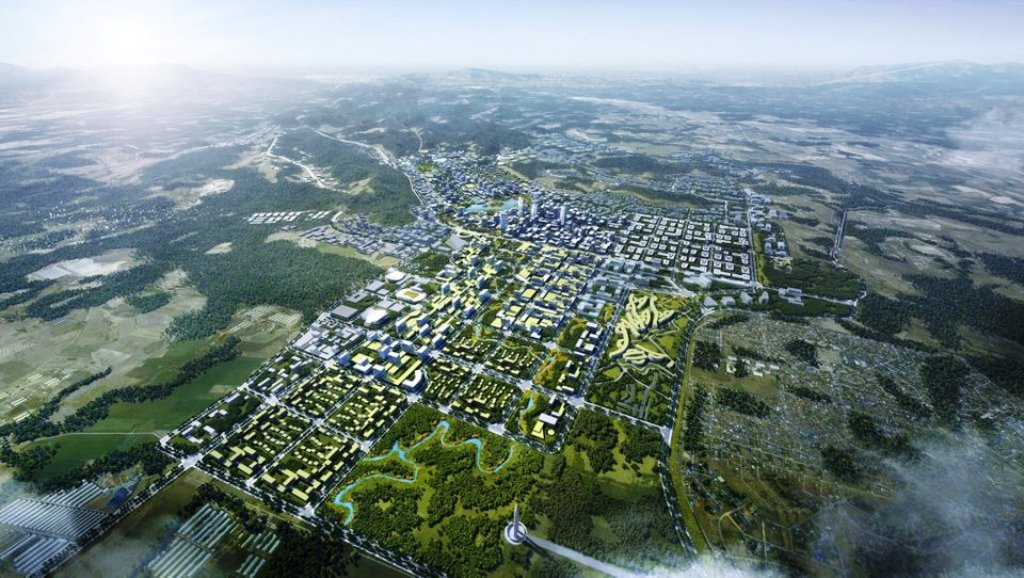
As a possible solution to Manila's smog and gridlock, the country plans to build an entirely new, more sustainable city called New Clark.

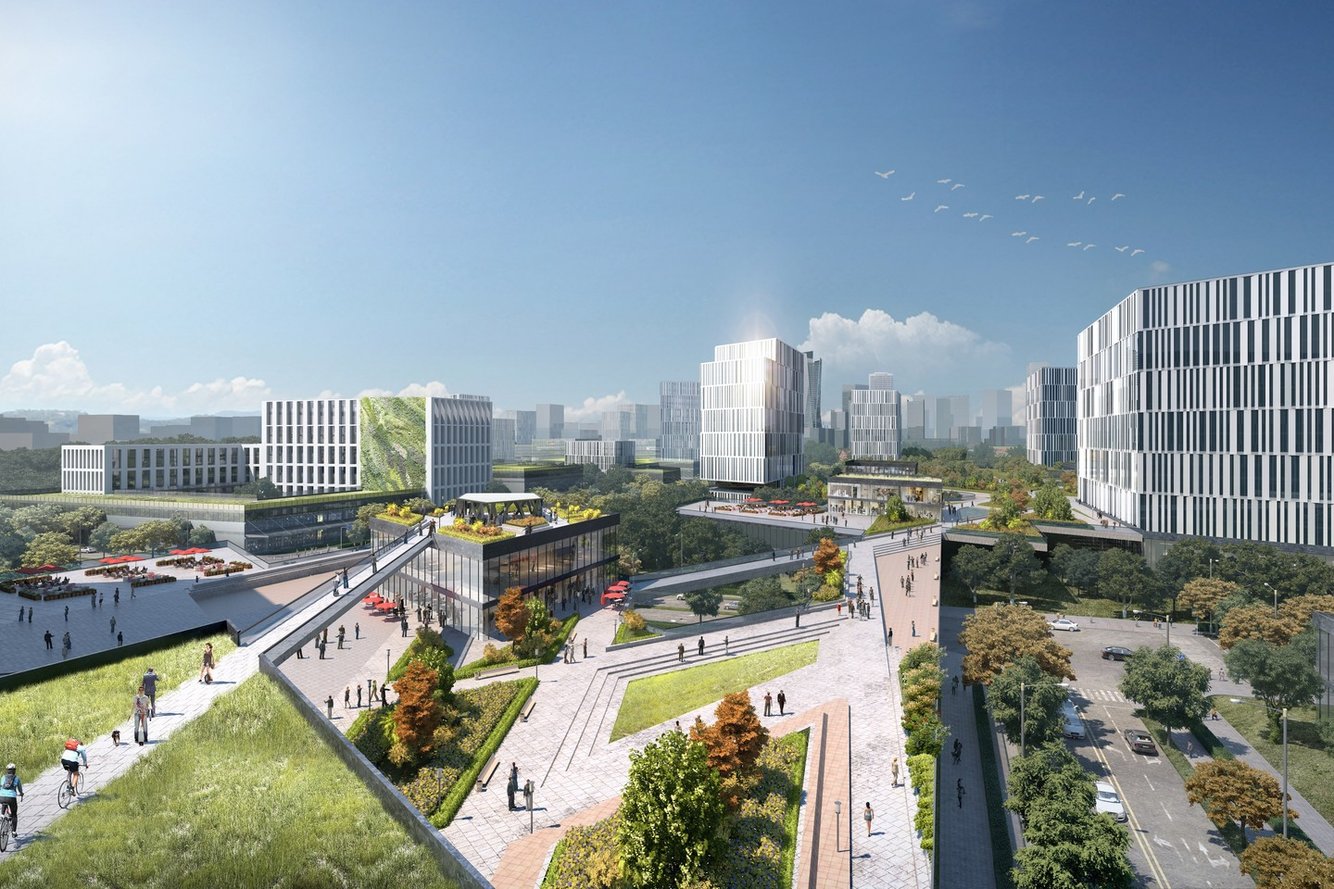
Plans for the $14 billion development — which will be larger than Manhattan — call for drones, driverless cars, technologies that will reduce buildings' water and energy usage, a giant sports complex, and plenty of green space.

Hi-tech City of New Clark, Philippines
A rendering of New Clark, a planned city for the Philippines. BCDA Group

Hi-tech City of New Clark, Philippines
BCDA Group Source: CNBC

Over the next three decades, the Philippines aims to build out New Clark about 75 miles outside Manila.

According to the development's plan, the city will eventually stretch 36 square miles — a land area larger than Manhattan — and house up to 2 million people.

BCDA Group Source: The Inquirer

New Clark will be divided into five districts, each with a specific function: government, business, education, agriculture, and recreation.

Pollution Free
BCDA Group

While New Clark's exact design is not fleshed out, developers say the urban plan will prioritize environmental sustainability and climate resilience.

Pollution Free
BCDA Group

With a minimum elevation of 184 feet above sea level, the city will likely not see much flooding.

Hi-tech City of New Clark, Philippines
BCDA Group

To reduce carbon emissions, two-thirds of New Clark will be reserved for farmland, parks, and other green space.

Pollution Free
BCDA Group - Source: Reuters

The buildings will incorporate technologies that reduce energy and water usage.

Pollution Free
BCDA Group 

Driverless cars, running on electric energy rather than CO2-emitting gas, will roam the streets.

Hi-tech City of New Clark, Philippines
BCDA Group 

Additionally, the city will feature a giant sports stadium and an agro-industrial park.

Pollution Free
BCDA Group 

New Clark's developers, BCDA Group and Surbana Jurong, plan to start construction in 2022.

Pollution Free
BCDA Group 

A new railway line could reduce the travel time between the two cities in half.

In late May, BCDA started the bidding process for companies to design, build, finance, operate, and maintain power and water systems in New Clark City.

Pollution Free
BCDA Group 

The Philippines also struggles with economic development, and building an eco-city from scratch will come with a hefty price tag.

Pollution Free
BCDA Group 

According to Wong, public-private partnerships will help finance the project.

Pollution Free
BCDA Group 

In recent years, countries around the world — especially China — have unveiled plans for pie-in-the-sky urban developments.

Pollution Free
BCDA Group 

Building cities from scratch rarely solve existing problems, but designing them can help urban planners imagine what's possible.

Pollution Free

The fate of this project is still in the hand of the Duterte Administration as Budget is always required, though this project is feasible but priorities are also queuing.

Another 10 beautiful Philippine Islands that aren't BORACAY

top 10 most famous and most beautiful islands in the Philippines
Top 10 most famous and most beautiful islands in the Philippines that aren't Boracay- Overnight Camping Experience

Just because Boracay is closed for 6 months, doesn't mean that your trip to the Philippines should be cancelled

The Philippines has just closed its best-known holiday island Boracay to tourists for six months over concerns that the once idyllic white-sand resort has become a "cesspool" tainted by dumped sewage.

Here are 10 other islands you can explore instead.

Caramoan Island

Caramoan Island is a rugged piece of land. It is very rich in greenery and has a large diversity of flora and fauna. It boasts perfect white sand beaches, tranquil lakes, deep caves, coves and rich marine life.

El Nido Palawan

El Nido Palawan is famous for its white sandy beaches as well as coral reefs. A perfect paradise to snorkel and see hundreds of fish species.

Panglao Island, Bohol

Panglao Island, Bohol used to be a very sleepy area. Very quiet. It has now been awakened by travellers looking for amazing beaches. The island offers a diverse array of water activities, like dolphin watching, snorkelling and whale watching just to name a few.

Malapascua Island, Cebu

Malapascua Island, Cebu is a charming and small isolated beach paradise. Their resorts are mostly beach bungalows, making you feel like you’ve left the whole world behind.

Malamawi Beach, Basilan Island

Malamawi Beach, Basilan Island, Western Mindanao. off Basilan Island, is dubbed a “hidden paradise” of  the ancient settler the Subanen Tribes is no longer hidden today. This is where you can find silky fine, white powdery sand (and a shade of pink sand too, according to CNN). From Zamboanga city you can reach this beautiful island in a 30-minute speed boat.  From Isabela City on the island province of Basilan (nearly twice bigger than Singapore) the resort can be reached in 10 minutes via boat at less than $1 per person. There’s a zip-line adventure and island-hopping adventures, too. There’s a rubber tree plantation on the island too.

Animasola Island, Masbate

Animasola Island, Masbate is one of the most beautiful islands of Burias. The small island is located at the north eastern side of  San Pascual. It’s a remarkable destination for travelers.

Guyam island, Siargao

Guyam island, Siargao. This island is so tiny, that it takes you about 3 minutes to walk along the entire circumference. It’s not usually an island that you stay on, rather island hop to from a nearby larger island. Siargao Island is a Surfing Capital of Asia.

Malcapuya island, Coron, Palawan.

Malcapuya island, Coron, Palawan. Beautiful beige sand, clear waters and corals reefs. The beaches are home to a long line of coconut palm trees. It is just picturesque and beautiful.

Cambugahay Falls, Siquijor

Cambugahay Falls, Siquijor. Siquijor is a beautiful yet tiny island province famous for waterfalls, diving, caves and forest walks. Most areas of Siquijor are great for snorkeling, so all you have to do is find the nearest beach and dive in.

Linapacan  Island

Linapacan  Island, is a stunning medium sized island which rarely sees a tourist, because it’s pretty tough to get to. There is no public ferry or air travel. You will have complete tranquillity and peace if you ever end up there.

Read more in: The Gulf News

FINALLY: LTFRB asks UBER to pay discounted ₱190 Million to lift the remaining 2 weeks Suspension

UBER System Inc., Philippines
Drivers and operators of UBER System Inc., gather and meet outside its main office in Mandaluyong City, August 15 2017, a day after the Land Transportation and Franchising and Regulatory Board suspended its accreditation and operation. Photo: Manila Bulletin 

The LTFRB late Friday night (25th August 2017) announced granting Uber’s appeal to lift the one-month suspension and pay instead a fine to make up for repeatedly violating the regulatory body’s order not to accept new drivers.

Rejecting the suggestion of the Kilusan sa Pagbabago ng Industriya ng Transportasyon (KAPIT) chairman Vigor Mendoza II that UBER should pay ₱6 Billion pesos, LTFRB finally decided a discounted amount that UBER should pay to lift the remaining 2 weeks of suspension.

“The Board thus rule to grant the prayer of respondent (Uber) to lift the suspension imposed in its order of 14 August 2017; in lieu thereof, imposes a fine of ₱190 million Philippine pesos,” the order, signed August 25, 2017, read.

In addition to the fine, Uber was told to remit ₱20 million as assistance to its 36,367 transport vehicle network service (TNVS) operators who were active in the last 28 days before the suspension order was issued. The ride-sharing company should show the LTFRB a certification from its depository bank as proof of its compliance.

 “The lifting of suspension will depend on the payment of fine and remittance of financial assistance,” LTFRB spokesperson Aileen Lizada told reporters in a text message..

Lizada said the ₱190 million fines was based on the average ₱7-10 million Uber earns from its 150,000 ridership per day, multiplied by the remaining days of suspension which was supposed to be effective until  September 14, 2017.

After facing off with LTFRB officials in a dialogue at the Senate, Uber on August 17, 2017 filed an appeal to the LTFRB to revoke its suspension, proposing that it pays a fine of greater amount than the ₱5 million earlier imposed on it for continuing to accept and activate TNVS operators under its platform despite the July 26, 2016 moratorium.

The regulator halted Uber’s operations for a month from Aug. 14, 2017 for disregarding a directive to stop accepting new driver applications.

Uber, which said it did not process those applications, later told the LTFRB it could pay a fine of ₱10 million Philippine pesos to get the suspension lifted.

The Uber freeze has attracted public attention because many Philippine commuters regard the ride hailing app as more reliable and competitive than mainstream transport services (TAXIs).

Grab, Uber and U-hop Philippines Group

Uber recently said it had nearly 67,000 Philippine drivers.

The dispute with the Philippine regulator is the latest setback this year to Uber (USA based firm), a firm valued at more than $60 billion US Dollars.

Its Philippines suspension caused a spike in demand for rival Grab, and long queues near offices and malls and some disgruntlement about reverting to using regular taxis.

Philippine Senator Grace Poe, a prominent advocate for improving transport services, tried to bring Uber and LTFRB officials together to work out a compromise. An executive of Uber apologized for its "misunderstanding".

Poe on Friday said the hefty fine should "make Uber rethink its actions and re-evaluate its strategy in testing the extent of government regulations."

The LTFRB last year suspended applications for ride-share operators, to work out how best to regulate the industry. It said Uber was "irresponsible" for challenging that order.

Cheap Samsung Galaxy S8 plus, Philippines

UBER Asked to pay LTFRB ₱6 Billion to avoid 1-month suspension: Too much

Uber Philippines asked to pay ₱6 Billion to avoid 1-month suspension
Uber Philippines asked to pay ₱6 Billion to avoid 1-month suspension. Photo: Tech Wire Asia

A transport group leader on Wednesday claimed that Transport Network Company (TNC) Uber Systems Inc. should pay a fine of P6 billion—and not ₱10 million as ordered by the government—in place of its one-month suspension.

Kilusan sa Pagbabago ng Industriya ng Transportasyon (KAPIT) chairman Vigor Mendoza II made the suggestion in a hearing before the board members of the Land Transportation Franchising and Regulatory Board (LTFRB).

Mendoza noted that under the rules, drivers without a 45-day provisional authority (PA), which allows them to accept fares until they are issued a franchise, will have to pay a fine of up to ₱120,000 each if caught.

The lawyer said since Uber has sround 50,000 "colorum" vehicles, or those operating illegally, the company should then pay the government ₱6 billion.

"A ₱ 10-million fine would only mean that Uber is operating 84 colorum vehicles," Mendoza said.

Grab, Uber and U-hop Philippines Group

'Too much'

However, LTFRB board member Aileen Lizada said that it would be "too much" for the board to impose a ₱6-billion fine.

"I believe that is too much. I believe billions would be too much. We do listen, reasonable naman tayo," Lizada told reporters.

She added that Uber's appeal to convert the one-month suspension into a fine will be resolved as soon as possible.

"On the part ng board, considering 'yung urgency ng matter, we will do out best to resolve this the soonest as possible time, para we put to rest already itong issue na ito and we will be able to meet our deadline for September namin na technical working group, what we promised Congress and Senate," she said.

"We will be crafting and revising MCs (Memorandum Circulars) and we will be coming for the number of both TNCs if we see na we will be able to renew the respective accreditation," she added.

Uber, on August 17, asked the LTFRB if it could just pay a ₱10-million fine instead of serving its one-month suspension.

The LTFRB suspended the accreditation of Uber after it continued to accept new drivers into their platform. — MDM/BM, GMA News

SAMSUNG GALAXY S 8 PLUS ON SALE CHEAPEST PRICE IN AMAZON

Duterte signed “Free Tuition Fee law” for all State Universities and Colleges- ₱100 billion Budget

“Free Tuition Fee law”  in the Philippines
[Free Tertiary Education] Free Tuition fee law in the Philippines

Universal Access to Quality Tertiary Education Law for bottom 20% poor but deserving Filipino students

- Free tuition fee for all state colleges and universities
- Free Library access
- Free  ID
- Free laboratory access

President Duterte has signed into law the Universal Access to Quality Tertiary Education Act which grants free tuition to all state universities and colleges (SUCs) in the country.

This despite the suggestion of a veto by Budget Secretary Ben Diokno as the government cannot afford to shoulder its cost estimated to be around ₱100 billion.

During the Mindanao Hour press briefing Friday morning, Senior Deputy Executive Secretary Menardo Guevarra said that the President signed the bill Thursday night.

“The enrolled bill came to the Office of the President nearly 30 days ago and during that period, there had been a lot of discussions and study about the bill because of its heavy budgetary implication” he explained.

Guevarra said that free tertiary education in SUCs is a very strong pillar or cornerstone of Duterte’s social development policy and that the President was still trying to figure out the best possible solution regarding the bill.

“So we weighed everything and came to the conclusion that the long-term benefits that will be derived from a well-developed tertiary education on the part of the citizenry will definitely outweigh any short-term budgetary challenges,” he said.

The Palace official also said that whether or not economic managers are for the passing of the bill, the more important thing now is to find the budgetary allocation for the program.

“Everyone, including the economic managers, will have to focus their attention on funding for this program because this will have to be implemented soon,” Guevarra said, adding that the SUC law will be implemented on the next school year.

Since the government has already submitted the proposed 2018 national budget to Congress, Guevarra said that certain adjustments can still be made so allocation for the law can be made.

“That is really the principal responsibility of Congress when they deliberate on the budget. Right now, I have nothing very specific to say about which projects or which programs or which agency’s proposed budget might be affected,” he said.

“If Congress is really serious in finding the appropriate funding for this free tuition program, they will have to find the necessary sources for this particular program,” he added.

Guevarra also addressed the estimate of the Department of Budget and Management (DBM) that ₱ 100 billion would be needed to implement the SUC law.

“The Commission on Higher Education (CHED) thinks otherwise. The ₱ 100-billion estimate of the DBM seems to be on the very high side because that is on the basis on the assumption that all aspects of the free tuition bill will be implemented all at the same time,” he said.

The CHED estimated that ₱ 34.1 billion would be needed for the implementation of the law.

According to Guevarra, the government would only have to spend on the mandatory provisions of the bill which includes tuition and miscellaneous fees which would need around ₱ 16 billion.

Education System in the Philippines
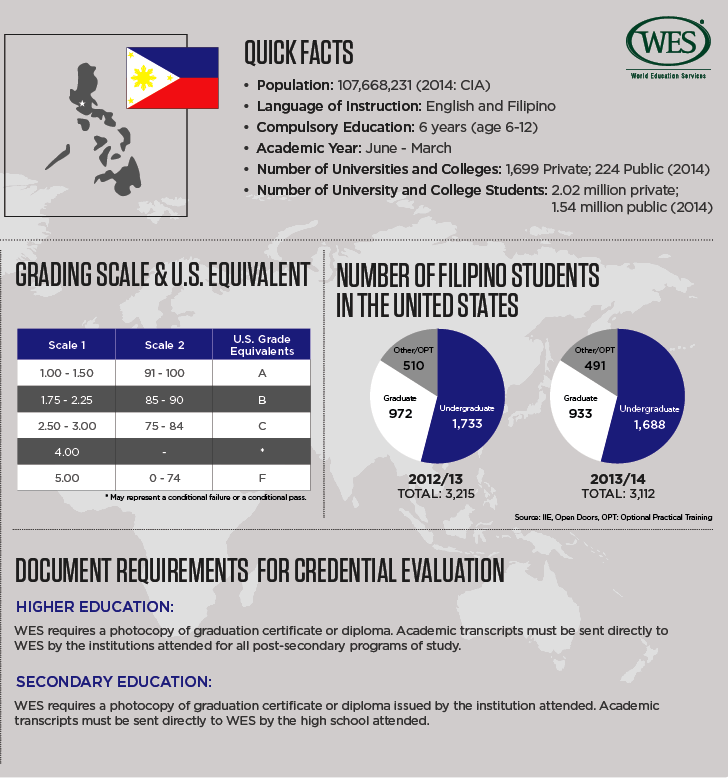
Diagram of educational system in the Philippines - wes.org

The related educational expenses like books and boarding would be shouldered for “deserving 20 percent” by the CHED’s Unified Student Financial Assistance System for Tertiary Education (UniFAST) program.

“As far as I know those are the only mandatory provisions of the bill for now – the free tuition and other fees. Other fees would refer to something like library fees, ID fees, laboratory fees, and stuff like that,” Guevarra explained.

“Now as to the subsidy for related educational expenses, that is something to be processed by the UniFAST board which is supposed to have a system of priority,” he said, adding that the fund and system under the UniFAST are yet to be established.

Null
Grade scaling for the educational system in the Philippines vs USA Education System - wes.org

“In other words, ‘yung mga talagang nangangailangan, the bottom 20 percent, will be prioritized in terms of subsidy for educational-related expenses,” he added.

The UniFAST rationalizes the allocation, utilization and client-targeting of government resources and improves access to quality higher and technical education for those who need it.

It also serves as the ultimate national human resource development mechanism and strategy that will direct beneficiaries to priority courses needed for economic growth and development. - By Argyll Cyrus Geducos from Manila Bulletin

First Batch of Qatari & Saudi investors Arrive the Philippines for Palawan, Visayas and Mindanao Million Dollar Projects

Qatari Investment in the Philippines
MOUs worth amounting to US$ 206 million were signed this afternoon between Qatari local companies and the Philippines Economic Zones Authority (PEZA) Photo: Asian Telegraph Qatai

1st batch of investors from Qatar, Mideast visit Philippines

The first batch of investors from Qatar and the Middle East has visited the Philippines to study the locations identified by the Philippine Economic Zone Authority (Peza) for investments in several sectors.

Peza director general Charito B Plaza posted on her Facebook page that investors from the Middle East “are ready” to invest on agro-industrial economic zones, including a 1,000-hectare area for poultry and vegetable crops.

Other projects, according to Plaza, include the development of five islands in the southern part of the Philippines where investors are planning to build a resort, retirement village, and other tourism destinations.

The first batch of Middle East investors is among the 13 companies that signed letters of intent (LoI) with Peza during Philippine President Rodrigo R Duterte’s state visit to Qatar in April.

Speaking to Gulf Times during Duterte’s Qatar visit, Plaza had said Mindanao would be home to most of the $206mn (P10.3bn) worth of investments Peza signed with Qatari investors. She said the investments are expected to generate 5,870 new jobs in the country.

The investments range from retirement village projects, hotel and tourism ecozones, IT services and digital marketing, ecozone management services, poultry and halal food processing, as well as agro-industrial farming, and hospital and medical tourism economic zones, among others.

Plaza said, “While waiting for the Peza board’s approval of their application, we can already start looking for areas and economic zones where the investors can establish their industries. Vast islands in Palawan, Mindanao, and the Visayas are awaiting development.” According to Plaza, Peza had achieved 64% of its $1bn target from its initiatives in Saudi Arabia, Qatar, and the UAE, which Duterte visited in April.

“Thanks to the good economic climate and favorable conditions of the Arab investment market, I am confident that Peza can easily exceed its $1bn target earmarked for the Middle East,” she pointed out.

She also said the Philippines would be an ideal distribution hub for Qatar in fields such as defense, manufacturing, and food processing due to its “strategic location” in Asia and the Pacific.

Plaza also emphasized on the need for economic zones with logistics hubs, seaports, and airports, which are under the helm of the Philippines’ Department of Transportation.

“These logistics hubs must have special economic zone services such as warehouses, cold storage, and container yards so that we have abundant facilities to stock goods while waiting for ships to arrive,” Plaza said. She added, “All types of economic zones can be built in the Philippines depending on the potential and the type of land. Agro-industrial, agro-forestry, paper making, aquamarine, eco-tourism, medical tourism, and export manufacturing remain to be the most popular.”

PEZA & Qatari Investors Sign MOUs of US $ 206 m Investments in Philippines Economic Zones

A number of Qatari business community members and their representatives had one to one detailed meeting with Chairman and accompanying members of Philippines Economic Zone Authority today.

On the sideline of President Duterte visit to Qatar, a number of MOUs worth amounting to US$ 206 million were signed this afternoon between Qatari local companies and the Philippines Economic Zones Authority (PEZA).

Ramon M. Lopez, Secretary (Minister) Department of Trade & Industry of Philippines was also present on the occasion and witnessed the MOU ceremony. On behalf of PEZA, Brig. Gen. Charito Booc Plaza, Director General PEZA signed the MOUs.

PEZA local representatives Joseph Rivera, Greg Loayon and Adel Sa’adeh assisted in organising the signing ceremony.

Philippines Trade minister and PEZA authorities are part of official delegation of President Rodrigo Duterte, who is on his official visit to State of Qatar.

Read more at Gulf Times and Asian Telegraph Qatar

Global Research Pointed: USA, Loida Lewis and Liberal party behind the ISIS attack in the Philippines

 Global Research Pointed: USA, Loida Lewis and Liberal party behind the ISIS attack in the Philippines
GlobalReaseach.ca pointed out who are behind the Islamist terrorist attack in Marawi City in Southern Philippines

In the article written by Stephen Lendman lives in Chicago, USA, he pointed that Washington, Loida Lewis and the Liberal Opposition party in the Philippines are behind the IS attack in Marawi a step to oust Duterte

Why is ISIS Operating in the Philippines?

In response to violence allegedly instigated by ISIS in the Philippines, President Rodrigo Duterte declared martial law in Mindanao, imposed military rule, and threatened to extend it nationwide to defeat the threat.

What’s going on? Why did ISIS begin operating in the Philippines? Weeks after taking office in mid-2016, Duterte blasted Western imperial Middle East policies, saying the Obama administration and Britain “destroyed the (region)…forc(ing) their way into Iraq and kill(ing) Saddam.”

“Look at Iraq now. Look what happened to Libya. Look what happened to Syria.”

He blasted former UN Secretary-General Ban Ki-moon for failing to act responsibly against what’s gone on for years – on the phony pretext of humanitarian intervention and democracy building.

He called Obama a “son-of-a-bitch” for his unaccountable actions – no way to make friends in Washington, especially if his geopolitical agenda conflicts with US aims.

Philippine President Rodrigo Roa Duterte meeting with Russian President Putin
Philippine President Rodrigo Roa Duterte meeting with Russian President Putin. Duterte cuts short trip to Russia after declaring martial law in southern Philippines due to Islamist terrorism attack in Marawi City. Photo: Japanese Times

On the day he declared martial law, he met with Vladimir Putin in Moscow for discussions on future military and economic cooperation.

He seeks improved economic and military ties with China. Ahead of visiting Beijing last October, he said

“only China…can help us,” adding:

“All that I would need to do is just to talk and get a firm handshake from the officials and say that we are Filipinos and we are ready to cooperate with you, to help us in building our economy and building our country.”

“If we can have the things you have given to other countries by the way of assistance, we’d also like to be a part of it and to be a part of the greater plans of China about the whole of Asia, particularly Southeast Asia.”

He promised to cool tensions over South China Sea disputes.

“There is no sense fighting over a body of water,” he said.

“We want to talk about friendship (with Beijing). We want to talk about cooperation, and most of all, we want to talk about business. War would lead us to nowhere.”

He announced no further joint military exercises with America, saying he’s open to holding them with China and Russia.

Shifting away from longstanding US ties doesn’t go down well in Washington. Are efforts by ISIS to establish a Philippines foothold part of an anti-Duterte Trump administration or CIA plot independent of his authority?

Null
Philippine President Rodeigo Roa Duterte meeting with Chinese President Xi Jinping cooling down the tension in South China Sea and promised cooperation, progress, peace and stability of the Asian Region.

According to a June 2 Duran.com report, retired Philippine military official Abe Purugganan claims ISIS violence in Mindanao is part of an opposition Liberal Party plan to undermine Duterte and oust him from office – citing information from a party whistleblower.

Below are the comments The Duran posted, saying:

“There is a lot of noises and chatters flooding the cyberspace, you got to use your discernment to filter all these information.”

“LETS PLAY FIRE WITH FIRE,” explaining “(t)hese are the exact words stated by Loida Lewis and her fellow oligarchs on a meeting months ago with Liberal Party members abroad,” adding:

Their plan is to use ISIS or ISIS-connected terrorists to instigate violence and chaos in Mindanao, wanting Duterte’s government destabilized and ousted.

If the information reported is accurate, it explains what’s now going on, likely to worsen, perhaps spread to other parts of the country.

Last week, Duterte said

“if I cannot confront (ISIS terrorists threatening the country), I will resign. “If I am incompetent and incapable of keeping order in this country, let me step down and give the job to somebody else.”

If US dirty hands are behind the ISIS insurgency, he’s got a long struggle ahead, trying to overcome the attack on him and perhaps Philippine sovereignty.

Stephen Lendman lives in Chicago. He can be reached at lendmanstephen@sbcglobal.net.
His new book as editor and contributor is titled “Flashpoint in Ukraine: How the US Drive for Hegemony Risks WW III.”

http://www.claritypress.com/LendmanIII.html

Visit his blog site at sjlendman.blogspot.com.

The original source of this article is Global Research
Copyright © Stephen Lendman, Global Research, 2017

Investment Recommendation: Bitcoin Investments

Live trading with Bitcoin through SimpleFX Trading platform would allow you to grow your $100 to $1,000 Dollars or more in just a day. Just learn how to trade and enjoy the windfall of profits. Take note, Bitcoin is more expensive than Gold now.


Where to buy Bitcoins?

For Philippine customers: You could buy Bitcoin Online at Coins.ph
For outside the Philippines customers  may buy Bitcoins online at Coinbase.com